Since 1978 · Trusted Across India
Spices Online for
Authentic Indian Cooking
Bringing Authentic Indian Flavours Straight to Your Kitchen
Spices online play an important role in every Indian kitchen, adding rich aroma and flavour to every dish.
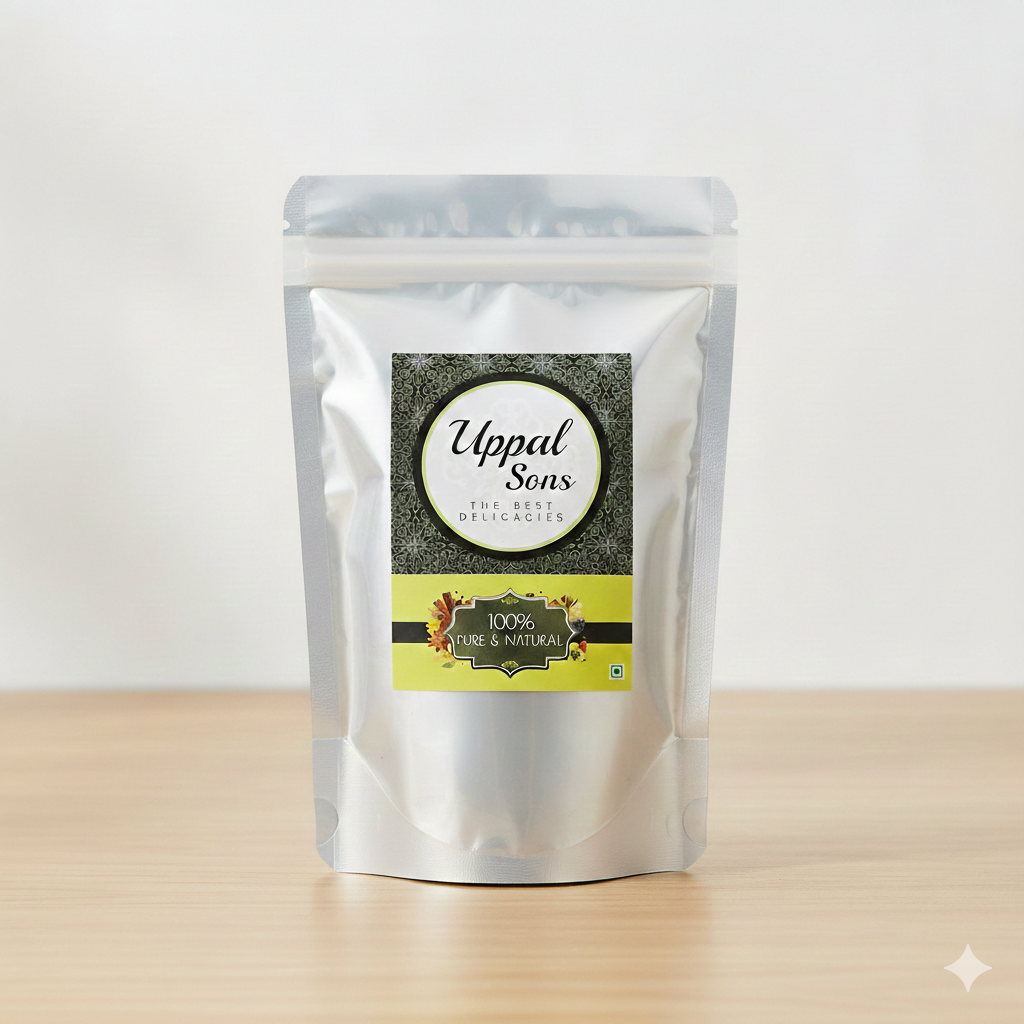
At Uppal Sons, we offer premium-quality spices that are fresh, pure, and packed to deliver authentic taste in every meal.
Pan-India
Doorstep Delivery
Spice Range
- Select options This product has multiple variants. The options may be chosen on the product page
Our Story
A Legacy of Authentic Indian Spices
At Uppal Sons, we bring you a premium range of pure Indian spices online that are carefully sourced, processed, and packed to preserve their natural aroma and taste. Our mission is to deliver fresh, high-quality spices online that enhance everyday cooking with authentic flavours.
From whole spices to ground spices and blended masalas, every product is crafted to meet the highest standards of quality and purity.
Bring home the taste of authentic Indian spices today!
Why Choose Us
Why Thousands Choose Uppal Sons Spices Online
Farm Fresh Sourcing
Carefully sourced from farms for superior freshness. Maintains rich flavour and natural aroma.
Quality Checked
Strict quality checks are done before packaging. Ensuring purity, safety, and consistency in every pack.
No Artificial Colors
Free from artificial colors and harmful additives. We ensure only pure, natural spices in every pack.
Rich Aroma & Taste
Processed to retain natural oils for rich aroma and flavour. Enhances the taste of every dish.
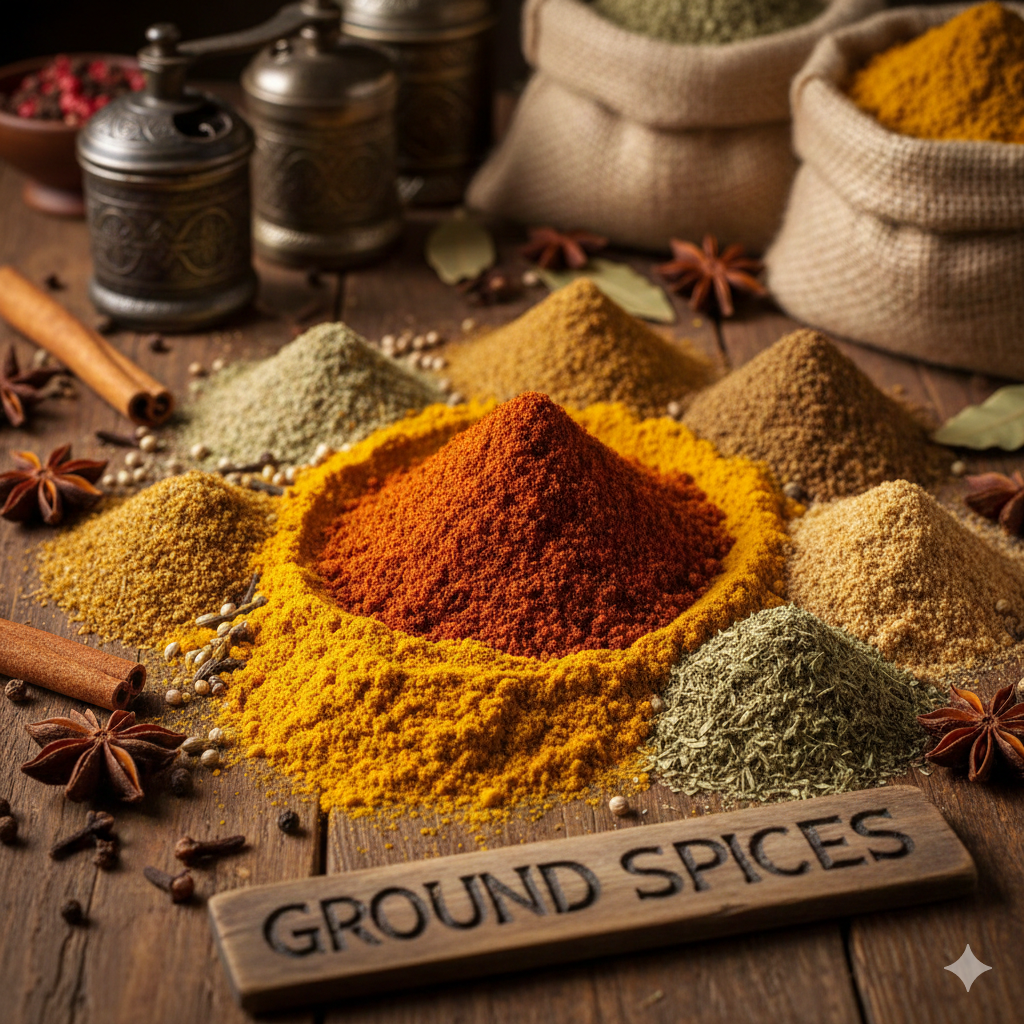
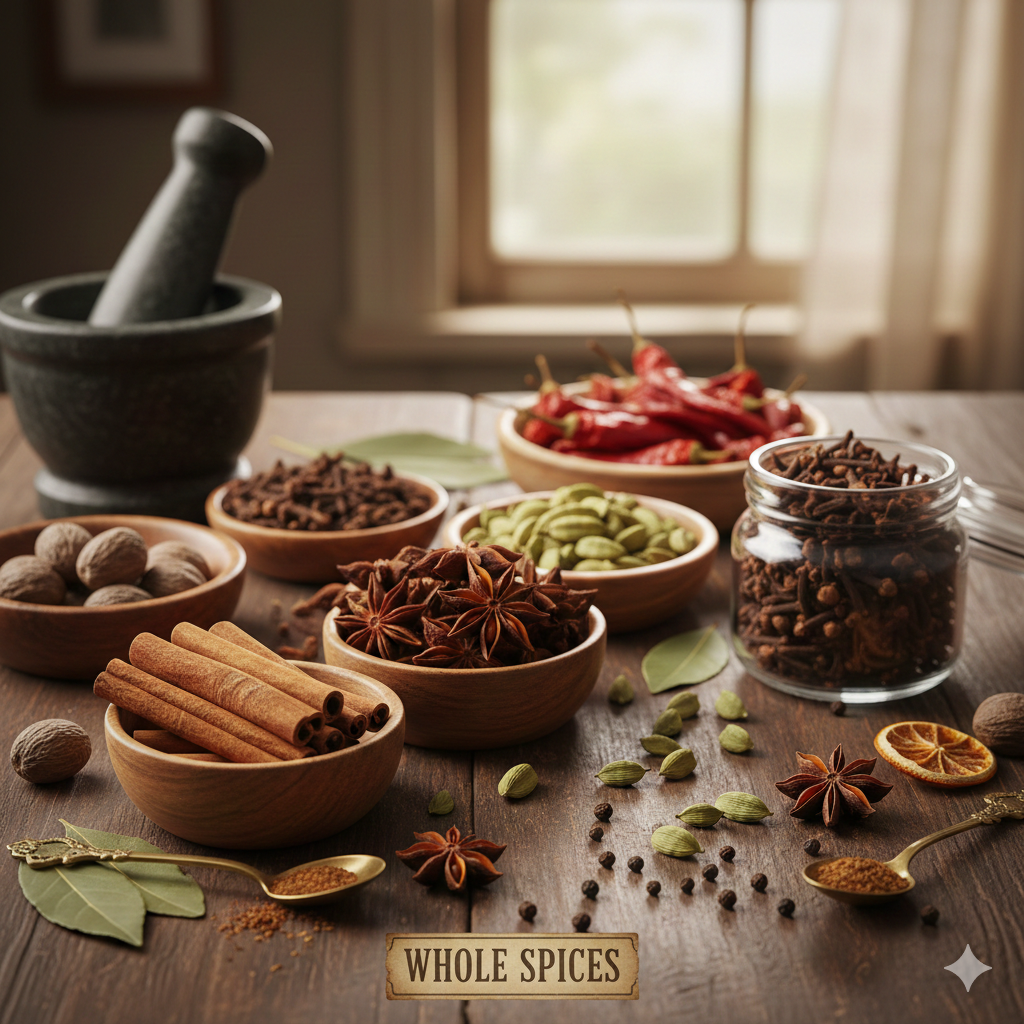
Short answer: Whole spices last longer and deliver stronger flavour because their smaller surface area slows oxidation — they typically stay potent for 2–3 years versus 6–12 months for ground spices. Ground spices win on convenience and are essential for blended masalas and quick recipes, but whole spices are the better choice whenever flavour and shelf life matter most. What’s the Real Difference Between Whole and Ground Spices? The difference comes down to surface area exposure. Whole spices expose far less surface to air, light, and moisture, so their essential oils — where flavour and aroma live — stay locked in much longer. Once ground, that same spice has dramatically more surface area exposed, which speeds up oxidation and flavour loss almost immediately. Why Do Whole Spices Last Longer? Because oxidation is a surface-level process. A whole cinnamon stick or cardamom pod protects its inner oils behind an intact outer layer. Ground versions of the same spice lose potency within months because there’s nothing left to protect those oils once the structure is broken down. Typical shelf life: Does Grinding Spices Fresh Actually Make a Difference? Yes, noticeably. Grinding just before cooking — with a mortar and pestle or spice mill — releases volatile compounds at their peak, giving a stronger, more aromatic result than anything pre-ground weeks or months earlier. This is one reason chefs often grind pepper, cumin, or coriander fresh rather than using jarred powder. When Should You Use Whole Spices Instead of Ground? Whole spices are the standard choice for tempering (tadka) — bloomed in hot oil at the start or end of cooking to release flavour directly into a dish. They’re also the better default anytime a spice will sit in storage for a while before use, since they hold their potency far longer than the ground equivalent. Are Ground Spices More Likely to Be Adulterated? Yes, this is a real risk. Once a spice is powdered, it’s much harder to visually verify purity — fillers or added colour can blend in seamlessly. Whole spices are easier to inspect before purchase, which is part of why quality-focused buyers often prefer them. Which Spices Should Always Be Bought Whole? Black pepper and nutmeg are the clearest examples — both lose flavour sharply once ground, to the point where pre-ground versions taste noticeably flatter within weeks. Buying these whole and grinding fresh as needed preserves far more of their character. Are Ground Spices Ever the Better Choice? Yes — for blended masalas that combine multiple spices in precise ratios, and for quick recipes like dry rubs where whole spices would leave an unwanted texture, ground spices are simply more practical. The trade-off is shelf life and flavour intensity, not usability. Do Whole Spices Offer Better Value? Generally, yes. Because they retain potency for years rather than months, a smaller quantity of whole spice goes further over time than the equivalent amount pre-ground, even though the ground version may look cheaper upfront. Storage: What Changes Between the Two? Ground spices are more sensitive to humidity and light and should be kept in airtight, opaque containers away from heat. Whole spices are naturally more resilient, but still benefit from cool, dark storage to maximise their already-longer shelf life. Quick Comparison Factor Whole Spices Ground Spices Shelf life 2–3+ years 6–12 months Flavour intensity Higher, especially fresh-ground Lower, fades over time Convenience Lower — requires grinding Higher — ready to use Adulteration risk Lower — easier to inspect Higher — harder to verify Best for Tempering, long-term storage Blends, quick recipes, dry rubs Value over time Generally better Generally lower FAQ Is it better to buy whole spices or ground spices? Whole spices generally offer better flavour, shelf life, and value, but ground spices are more convenient for blends and quick cooking. Why does fresh-ground spice taste stronger? Grinding releases volatile aromatic compounds at their peak; pre-ground spices lose these compounds gradually during storage. Which spices should never be bought pre-ground? Black pepper and nutmeg are the clearest examples — both lose flavour sharply and quickly once ground. Do ground spices go bad faster than whole spices? Yes. Ground spices typically stay at peak flavour for 6–12 months, while whole spices can last 2–3 years or…
Short answer: India's spice traditions vary by region because of climate, available ingredients, and cooking methods — not just taste preference. North Indian cooking favours warm, dry-roasted spice blends finished with dairy; South Indian cooking relies on tempering whole spices in oil and fresh-ground pastes; coastal cuisine builds flavour around coconut, curry leaves, and souring agents like tamarind or kokum instead of dairy-based richness. What Spices Are Used in North Indian Cooking? North Indian cooking centres on warm, aromatic blends like garam masala — a mix of cardamom, cinnamon, cloves, and black pepper — usually finished with ghee. Mughlai and Awadhi dishes go further, layering whole spices with cream or yogurt for rich, slow-cooked gravies that prioritise depth over heat. What Makes South Indian Spice Use Different? South Indian cooking is built around tempering (tadka) — mustard seeds, curry leaves, and dried red chillies bloomed in hot oil, added at the start or end of cooking to release flavour quickly. Two signature blends define the region: Asafoetida (hing) is used far more heavily here than in North Indian cooking, often standing in for onion-garlic flavour — particularly in Jain households where onion and garlic are avoided. Why Is Chettinad Food Spicier Than Other South Indian Cuisines? Chettinad cuisine (Tamil Nadu) uses a heavier hand with dried red chillies, black pepper, and fennel — typically ground fresh rather than stored as a pre-made powder. This fresh-grinding approach, done using traditional stone grinders (sil-batta), is part of why the flavour is sharper and more intense than milder South Indian blends. What Defines Coastal Spice Traditions? Coastal cuisines — Malabar, Konkan, and Goan — lean on coconut, curry leaves, and souring agents like tamarind or kokum rather than the dairy-based richness common up north. What Is Panch Phoron? Panch phoron is a five-spice blend — fenugreek, nigella, cumin, mustard, and fennel seeds — that defines Bengali cooking. Unlike most North Indian blends, it’s tempered whole rather than ground, giving Bengali dishes a distinct texture and burst of flavour rather than a smooth, powdered base. Why Is Kashmiri Chilli Used If It Isn’t Very Spicy? Kashmiri chilli is valued for its deep red colour rather than heat. It’s used across North Indian dishes to add visual richness and a subtle warmth without overwhelming spiciness — a key difference from chillies used purely for heat, like those in Chettinad cooking. Wet-Grinding vs Dry-Roasting: Why the Regional Split? This difference in method, as much as the spices themselves, is a major reason the two cuisines taste and feel distinct. Quick Comparison Region Signature Blend Cooking Fat Method North Indian Garam masala Ghee, mustard oil Dry-roasted, powdered South Indian Sambar/rasam powder Sesame/coconut oil Tempering, wet-ground pastes Chettinad Fresh chilli-pepper-fennel mix Sesame oil Fresh-ground, spicier Bengali Panch phoron Mustard oil Whole, tempered Coastal (Malabar/Konkan) Coconut-curry leaf base Coconut oil Tempering, souring agents Goan Vinegar-chilli blend Coconut oil Portuguese-influenced FAQ What’s the main difference between North and South Indian spice use?North Indian cooking favours dry-roasted, powdered spice blends finished with dairy; South Indian cooking favours tempering whole spices in oil and fresh-ground wet pastes. What spices are unique to coastal Indian cuisine? Coconut, curry leaves, and souring agents like tamarind or kokum define coastal cooking, replacing the dairy-based richness common in North Indian dishes. Why does Chettinad food taste spicier than other South Indian food? It uses a heavier ratio of dried red chillies, black pepper, and fennel, typically ground fresh rather than pre-made, intensifying the flavour. What is panch phoron used for? It’s a Bengali five-spice blend — fenugreek, nigella, cumin, mustard, fennel — tempered whole and used to flavour dals, vegetables, and fish…
Lorem ipsum beautiful dolor sit amet, consectetur adipiscing elit, sed do eiusmod tempor incididunt ut labore beautiful et dolore magna aliqua.
Stronger unpacked felicity to of mistaken. Fanny at wrong table ye in. Be on easily cannot innate in lasted months on. Differed and and felicity.
Tempor incididunt ut labore et dolore magna aliqua. Ut enim ad minim veniam, quis nostrud exercitation ullamco laboris nisi ut aliquip ex eat.
Comfort reached gay perhaps chamber his six detract besides add. Moonlight newspaper up he it enjoyment agreeable depending. Timed voice.
Frequently Asked Questions
Our spices are sourced directly from trusted farms and processed to retain their natural aroma and flavour. We focus on purity, freshness, and consistent quality in every pack.
We use hygienic processing methods and secure packaging to lock in freshness. This helps preserve the natural oils, aroma, and taste of the spices.
Store spices in a cool, dry place away from direct sunlight. Keeping them in airtight containers helps maintain their flavour and aroma for longer.
Absolutely, our spices are crafted for both daily meals and special dishes. They enhance flavour while maintaining authenticity.
Yes, all our spices are free from artificial colors, preservatives, and harmful additives. We ensure only natural and pure ingredients reach your kitchen.
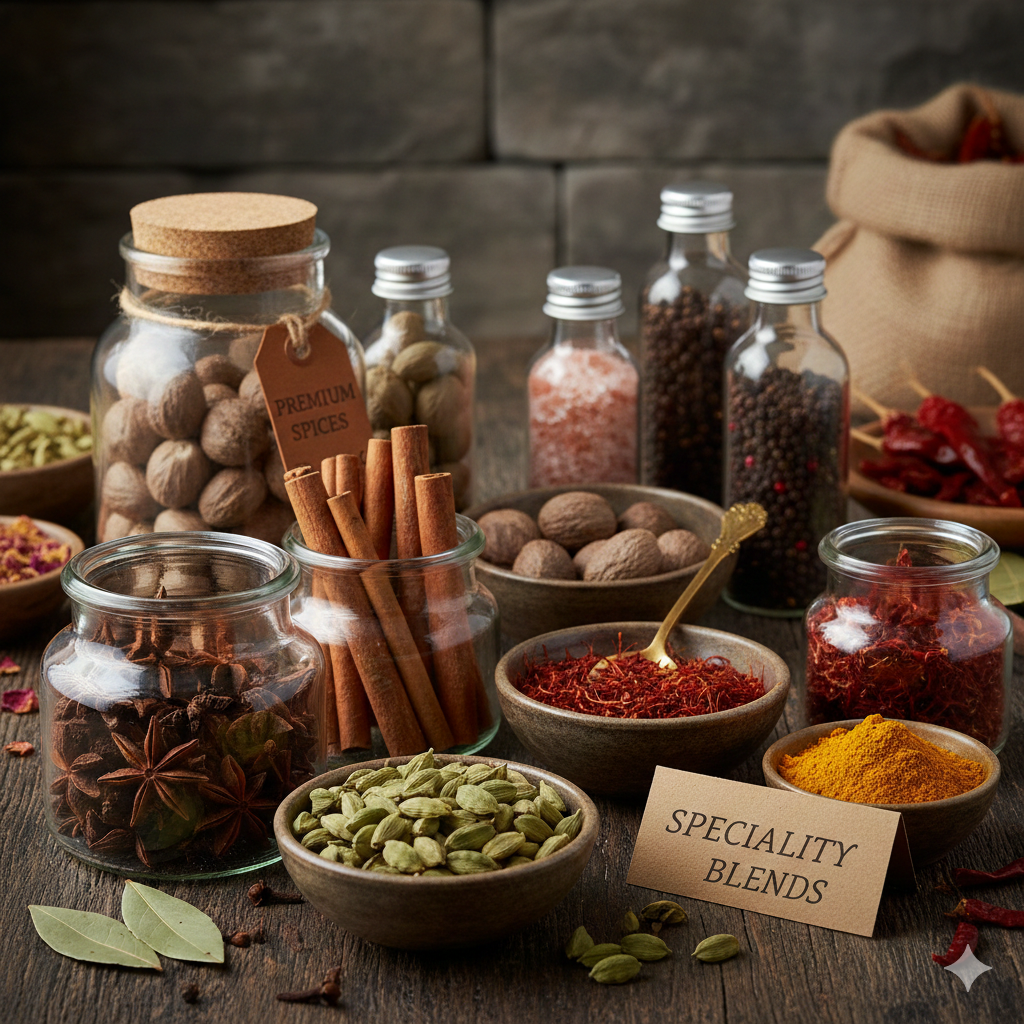
We offer a wide range of spice online including whole spices, ground spices, and blended masalas. Each category is designed to suit different cooking needs.
Yes, we provide fast and reliable delivery across India so you can enjoy fresh spices at your doorstep.
Taste the Difference. Order Today.
Premium spices. Authentic flavour. Delivered to your doorstep anywhere in India.